


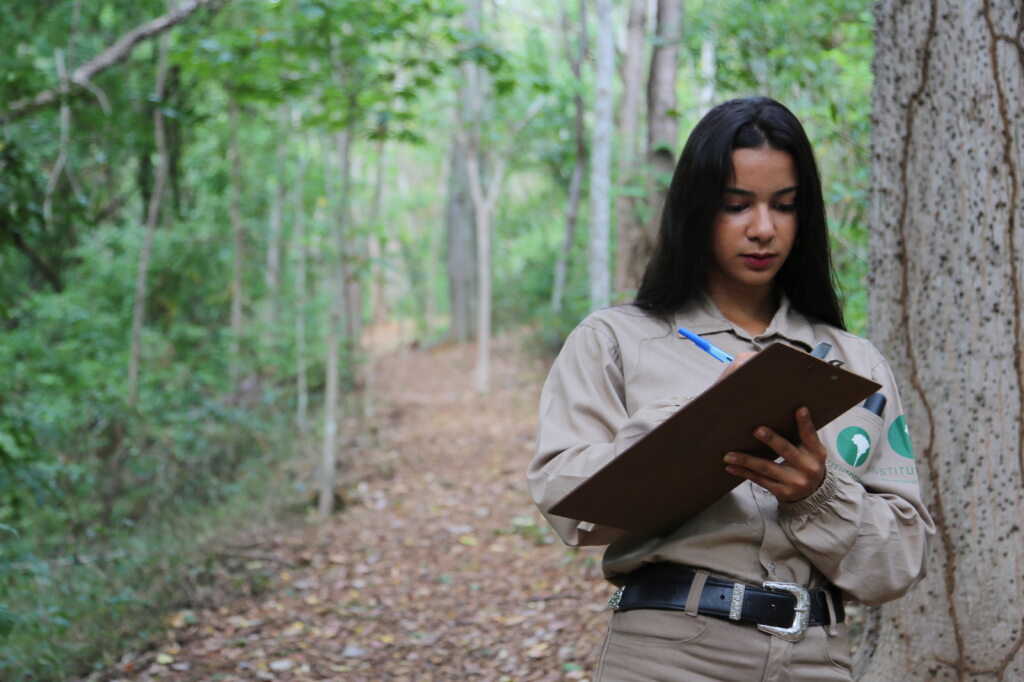
In 2024, the Center for Ecosystem Restoration Studies (NERE), an educational program run by Instituto Terra, graduated a new class of 23 young people from the Doce River Basin. In addition to technical training in ecological restoration, the experience included unprecedented benefits and an expanded approach to personal and professional development. We spoke to Wallace Carvalhido, the program’s technical coordinator, about the highlights of the year, the challenges faced and the paths taken by new restoration professionals.
How did 2024 begin for the NERE program?
We started 2024 in February with 23 young people. Young people from the Rio Doce Valley, from neighboring towns in both Espírito Santo and Minas Gerais.
How did these students arrive and what did they experience throughout the year?
These students arrived here in February and took part in various activities throughout the year. We’ve gone through a restructuring of activities, with more courses being offered, perhaps even with a greater workload than before, and with some differentials: additional benefits and investments in these young people.
What were these additional investments?
We invested in English classes, and by the end of the year some students were presenting their final papers in English. Students who arrived here without any command of the language were able to present the introduction to their projects in English, which brought us great joy.
Besides English, were there any other initiatives?
We also offered financial support so that they could get their category B driver’s license. Most of them left the course already qualified. We believe that the card opens doors and facilitates access to the job market. We also offered scholarships and financial support so that they could carry out their activities and visit their families, since the course is free.
How does the program guarantee structure for the participants?
It’s a free course in which we provide the entire structure: personal protective equipment (PPE), all meals, accommodation and the conditions for them to carry out their activities here at the Institute.
Was the physical part also included in the training?
We also offer sports practices, with a physical educator accompanying the activities on a weekly basis.
It was a different year, right?
It was a different year. The 23 young people went through various activities, many courses. Among them, we offer training in meliponiculture, fauna, flora and a complete course in forest restoration, covering all the modules. We do a lot of activities with this group. It was an intense year, but all the actions planned at the beginning of the year were successfully completed. All the objectives were achieved.
How did the cycle end?
This group ended 2024 with the graduation of 23 new professionals, who are now shining in society. Some remained in Aimorés, others returned to their farms. This is a great joy for us.
How do you see the importance of partners for the program?
The most important thing is that we have partners who believe in the course, believe in this action, believe in this program. We thank all our partners, everyone who believed in 2024. Because without them, we wouldn’t have been able to offer all the activities we do. It was because someone believed, because someone invested.
What about the impact on the lives of the young people who have been through the program?
When our students leave here, they leave with a bit of the Institute inside them. And different people leave than when they arrived. Because our training is not just technical. We don’t just want to train specialists in ecological restoration. We also train people in communication and leadership. Someone believed in this cause. Someone believed in this program. And none of this would have been possible without the support of our partners.