


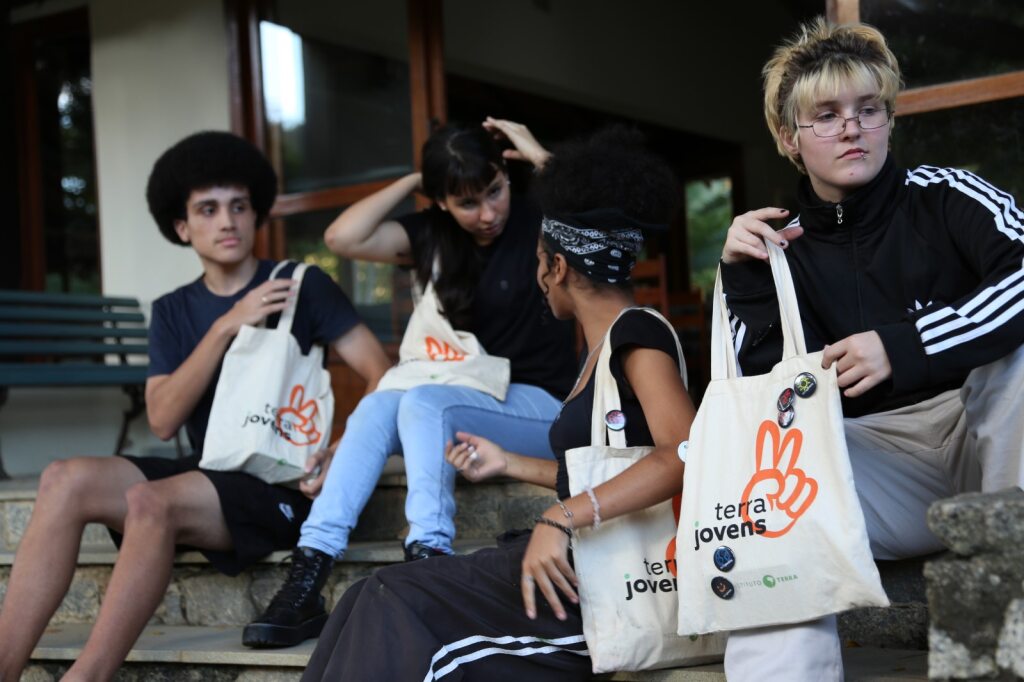
Terra Jovens is a Terra Institute program created to engage and train young people aged 16 to 29 from the Doce River Basin in contemporary socio-environmental issues, citizenship and audiovisual production. Through thematic and technical workshops, the project combines critical education, creative practice and community empowerment. More than training, the aim is to give new generations a voice and a leading role, so that they themselves can tell the stories of their region and help transform it.
One of the greatest assets of this initiative lies precisely in the diversity of the group that forms each edition. The class of 2024 brought together indigenous, LGBT+, black, rural dwellers and students from urban areas, all bringing unique baggage and perspectives on what it’s like to live in the Doce River Basin. Each participant arrived carrying their own story, their pain and their struggle for space. And it was precisely this plurality that strengthened the discussions and gave weight to the narratives created during the course.
The stories that emerged there are not neutral: they speak of invisibility, prejudice, pride of origin and resistance. Young indigenous people revived traditional knowledge by addressing the relationship between the people and the land. LGBT+ participants found on camera a way to denounce discrimination that is still common in their communities. And rural dwellers shared the hard and often invisible routine of those who live far from urban centers. Together, they transformed these experiences into scripts and videos that thrilled the audience at the final screening and opened up new dialogues in the community.
“My indignation is the prejudice against sexuality, against races. Prejudice is a very negative thing. What struck me most about this project was the lack of such projects here in the region. Themes like this are very important and need to be debated with diverse opinions,” said participant Victória Pimenta.
The Terra Institute believes that restoring the Rio Doce Valley goes far beyond planting trees: it’s also about rebuilding ties, valuing stories and opening up space for those who never had a voice. This diverse generation has already understood this – and is writing, with its own hands, a fairer and more inclusive future for everyone.