


By Naiara Bertão, for Um Só Planeta – Aimorés, Minas Gerais
Vocal in his defense of nature, the renowned Brazilian photographer Sebastião Salgado never misses an opportunity to criticize humanity’s predatory and destructive actions and reiterate that we can no longer just be spectators of destruction, but agents of change. And soon. Raising awareness of the importance not only of preserving what we have left, but also of learning to live with the environment without destroying it, is one of the flagships of the Instituto Terra projects, founded by him and his wife, Lélia Deluiz Wanick Salgado, in 1998, in Aimorés, Minas Gerais, near the border with Espírito Santo.
Born out of the desire to transform the devastated territory of Fazenda Bulcão, which belonged to Sebastião’s parents, the institute is now a national benchmark in ecosystem restoration. In almost three decades, more than 700 hectares have – literally – come back to life, through the hard work of planting, irrigating, maintaining and conserving species native to the Atlantic Forest.
However, more than setting an example, the Salgado family wants to train multipliers of the knowledge they have accumulated. To this end, education is a central pillar of the strategy and is divided into three main fronts.
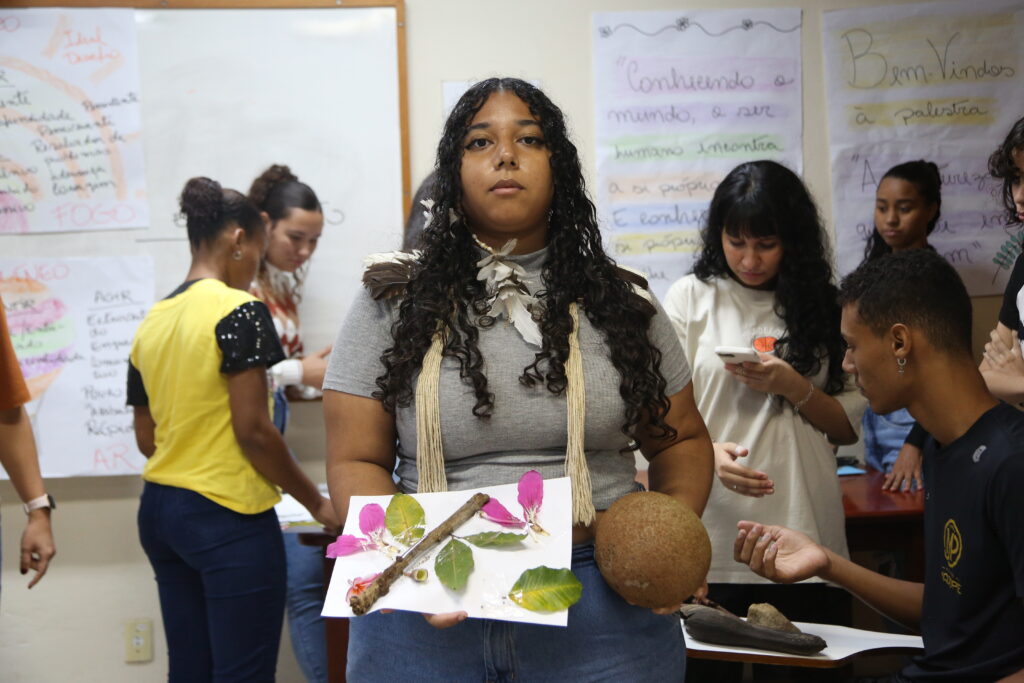
One of them is environmental education with children. The Terrinhas program, created in 2008 and resumed in 2023 after a hiatus, has already trained more than 80,000 children and teachers. Last year alone, 560 students went through the seven-month courses, with monthly meetings at the institute and classroom activities, covering topics such as the importance of water, conservation of riparian forest and community engagement. At the end, each child plants a native tree on the institute’s grounds.
“Our idea is to train multipliers of the content learned here, so they need, with the support of the teachers who accompany them on the project, to replicate this knowledge in some way in their schools and communities,” says Thaís Moraes, Terrinhas’ pedagogical coordinator.
By 2025, the goal is to serve 750 children and reach 2,100 by 2027. But demand is growing: according to Thaís, it is no longer possible to receive all interested schools, and the institute is studying expanding the method into classrooms.
Another front is the Ecosystem Restoration Studies Center (NERE), aimed at young people up to the age of 22 with a technical high school education. The full course lasts 11 months, includes more than 2,000 practical and theoretical hours and requires residency at the institute. Students leave as technicians in ecosystem restoration, many with job offers even before graduation.
“We have the opportunity to have practical experience and become trained to know the interrelationships of the environment with everything else and to work with that,” says one of the students.
Throughout the year, the young people receive accommodation, meals, a daily allowance, English lessons and educational support. The selection process is competitive: the team travels thousands of kilometers to advertise the vacancies, of which there are no more than 26 per class due to the physical limitations of the accommodation.
The third front is Terra Doce, which works with rural producers to conserve and restore degraded areas, especially springs and riparian forests, offering technical assistance and promoting agroforestry systems as a sustainable and economically viable alternative.
Instituto Terra has already impacted more than 2,000 families and wants to reach another 2,000 by 2027. For the team, forest restoration isn’t just about planting trees: it’s about rebuilding relationships between people, soil, water and the community – forming citizens who are aware of and prepared for a future that will increasingly demand this of everyone.